 | 2024 Two problems about moral responsibility in the context of addiction [Supported]Author(s): Federico Burdman
Can addiction be credibly invoked as an excuse for moral harms |


 | 2024 Histories of care: gender, experience and humanitarian knowledge(s) [Supported]Author(s): Valérie Gorin,Dolores Martin-Moruno By repositioning Renée-Marguerite Frick-Cramer’s and Marguerite van Berchem’s work in the tracing agencies of the International Committee of the Red Cross, this article seeks to contribute to the development of a history of care involving the production of a form of knowledge aimed at caring, at distance, for people who had been separated due to warfare. This perspective, which looks at examining the interactions between gender, class privilege and race, allows us to rectify the masculinist vision which has dominated this Geneva-based international agency, as well as to comprehend Frick-Cramer’s and van Berchem’s service activities as having evolved from inconspicuous expertise to invaluable work. A close analysis of the rare institutional records which have been preserved about the missions led by these two female representatives enables us to conclude that their moral concern, which led them to aid both military and civilian populations during warfare, was rooted in emotions such as indignation and resentment. |
 | 2024 [Supported] Author(s): Laurie Zoloth |
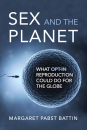 | 2024 Sex and the Planet What Opt-In Reproduction Could Do for the Globe [Supported]Author(s): Margaret Battin What if human reproduction was always elective? A prominent bioethicist speculates about the possibilities—and the likely consequences. What would the world be like if all pregnancy was intended, not unintended as it is nearly half the time now? Considerably better, Margaret Pabst Battin suggests in Sex and the Planet, a provocative thought experiment with far-reaching real-world implications. Many of the world's most vexing and seemingly intractable issues begin with sex—when sperm meets egg, as Battin puts it—abortion, adolescent pregnancy, high-risk pregnancy, sexual violence, population growth and decline. Rethinking reproductive rights and exposing our many mistaken assumptions about sex, Sex and the Planet offers an optimistic picture of how we might solve these problems—by drastically curtailing unintended pregnancies using currently available methods. |
 | 2024 L'Ebola, les bombes et les migrants [Supported]Author(s): By theme: Other L'Ebola, les bombes et les migrants |
| 2024 In Defense of Normothermic Regional Perfusion [Supported]Author(s): Robert Truog,Samuel Doernberg |
| 2024 Deconstructing self-fulfilling outcome measures in infertility treatment [Supported]Author(s): Mayli Mertens,Heidi Mertes |
| 2024 [Supported] Author(s): Karine Dube,Brahm Coler,Gordon Honerkamp Smith,Anish K Arora,Adam Wells,Stephanie Solso,Cheryl Dullano,Susanna Concha-Garcia,Eddie Hill,Patricia K Riggs,Anastasia Korolkova,Robert Deiss,Davey Smith,Erin E Sundermann,Sara Gianella,Antoine Chaillon |
| 2023 “The Irish giant” and the questions haunting medical museums [Supported]Author(s): Orla O'Donovan The reopening of the Hunterian Museum has resurfaced questions and concerns about the use of human remains as museum specimens and decolonising museum collections, writes Órla O’Donovan. |
| 2023 The deadly legacy of a stem cell charlatan [Supported]Author(s): Carl Power,John Rasko Paolo Macchiarini misled the world over his breakthroughs in regenerative medicine, but why did most of the institutions that supported him bear no responsibility for hosting a rogue stem cell surgeon? It’s time for them to launch full and independent investigations, argue John Rasko and Carl Power |
| 2023 What Watson and Crick really took from Franklin [Supported]Author(s): Nathaniel Comfort Rosalind Franklin was no victim in the discovery of DNA’s structure. An overlooked letter and an unpublished news article, both from 1953, show that she was an equal contributor. |
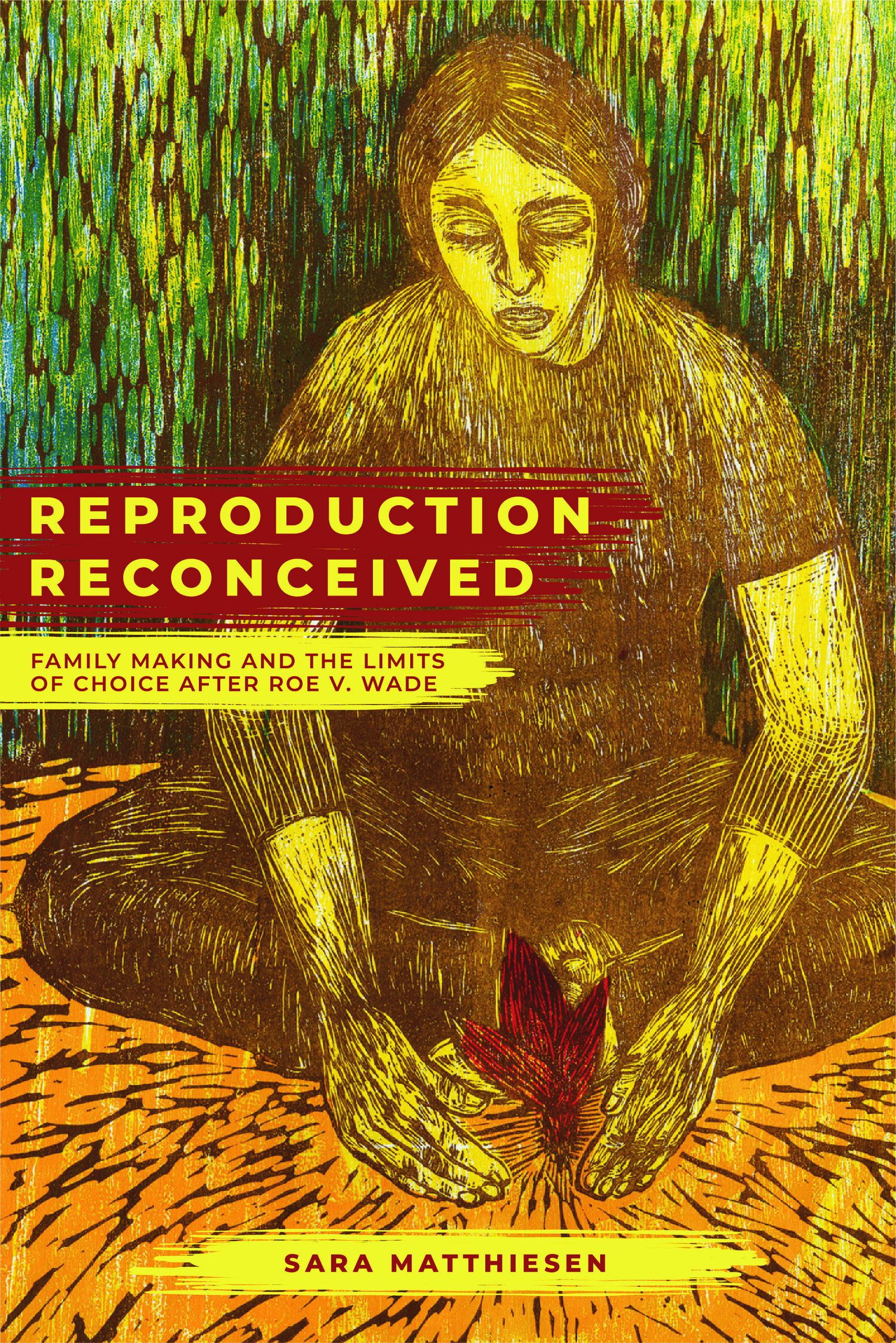
| 2023 Reproduction Reconceived Family Making and the Limits of Choice after Roe v. Wade [Supported]Author(s): Sara Matthiesen |
| 2023 How pandemic publishing struck a blow to the visibility of women’s expertise [Supported]Author(s): Jocalyn Clark |
| 2023 [Supported] Author(s): Karine Dube Initiated in 2017 after extensive community engagement, the Last Gift program enrolls altruistic volunteers willing to donate their cells and tissues at the end of life to allow studies on HIV reservoir dynamics across anatomical sites. As the Last Gift team received tissue requests outside the scope of HIV cure research, we noticed the absence of guiding frameworks to help prioritize the use of altruistically donated human biological materials. In this commentary, we present a proposed framework for prioritizing the use of donated human biological materials within and outside the end-of-life (EOL) HIV cure research context, using the Last Gift study as an example. First, we discuss regulatory and policy considerations, and highlight key ethical values to guide prioritization decisions. Second, we present our prioritization framework and share some of our experiences prioritizing requests for donated human biological materials within and outside EOL HIV cure research. |
| 2023 Reflections on Brocher: Philanthropy, fog and restoration [Supported]Author(s): Ann Gallagher The Brocher Foundation is beautifully positioned on the edge of Lake Geneva, nestling between the Jura mountains in front and the Alps behind. This special space, graced by breath-taking sunrises and sunsets, enables enriching interdisciplinary, international and intergenerational reflection.1 Reflection on some of the most important and challenging issues of our time. Reflection on matters that impact individual scholars in local and global communities. Reflection that enables restoration, instils hope and facilitates moral progress ‘beyond the fog of daily worries’. |
| 2023 [Supported] Author(s): Karine Dube
Analytical treatment interruptions (ATIs) have become a key methodological approach to evaluate the effects of |
| 2023 [Supported] Author(s): Karine Dube
In the last four decades, HIV has become a manageable chronic
with no expectation of direct clinical benefit.5,12 Similar EOL trans-
Participants are considered partners in research towards an HIV cure,
The last few years have witnessed an expansion of the ethics litera-
members to establish basic ethical criteria for EOL HIV cure research.
consent, 2) avoidance of exploitation and fostering altruism, 3) main-
ensuring participant-centered focus18 and 5) preserving acceptance of |
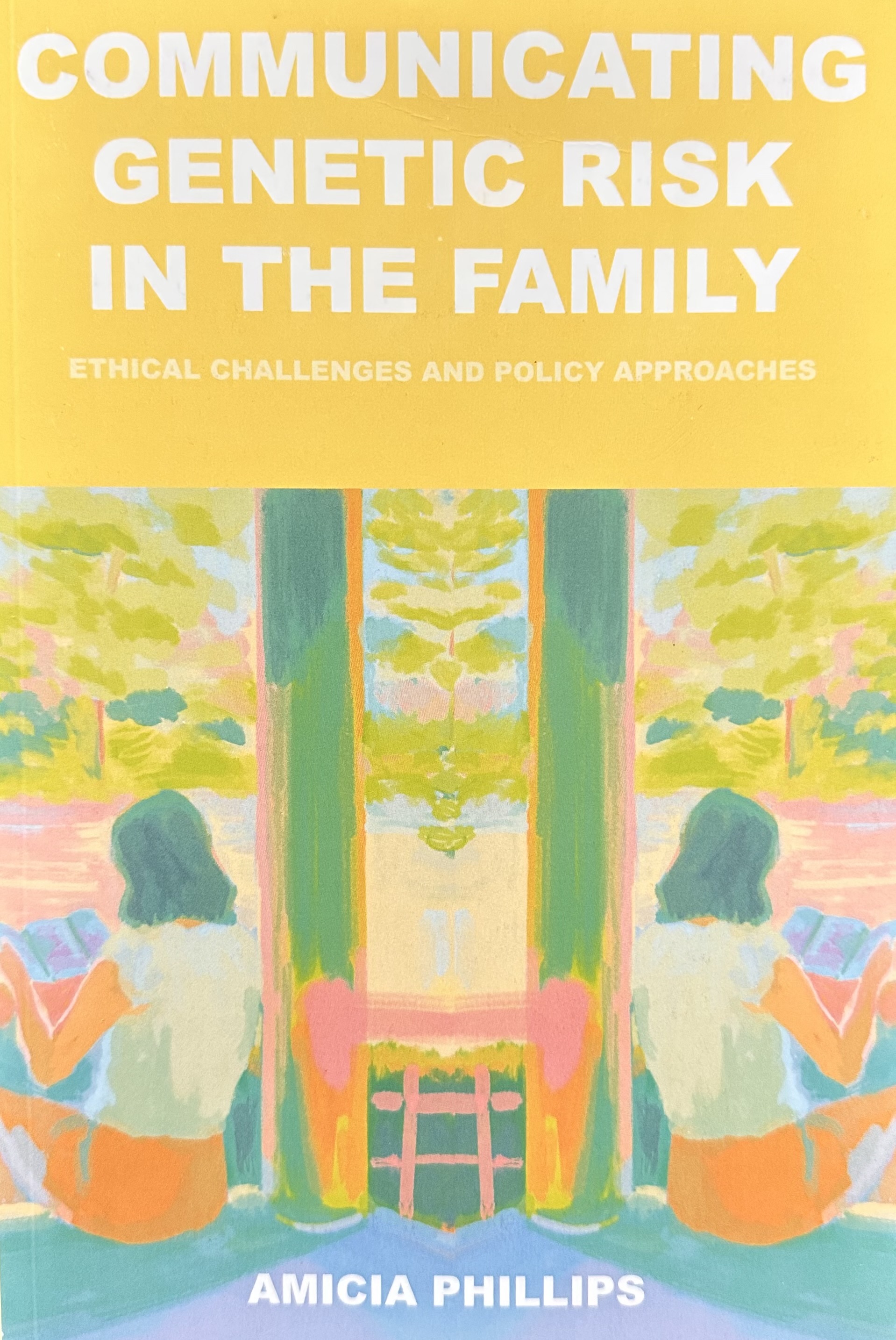
| 2023 Communicating genetic risk in the family, Ethical challenges and policy approaches [Supported]Author(s): Amicia Phillips
Identification of a genetic condition in a patient can have implications for other family members who |
| 2023 [Supported] Author(s): Katherine Saylor The main goal of publicly funded biomedical research is to generate social value through the creation and application of knowledge that can improve the well-being of current and future people. Prioritising research with the greatest potential social value is crucial for good stewardship of limited public resources and ensuring ethical involvement of research participants. At the National Institutes of Health (NIH), peer reviewers hold the expertise and responsibility for social value assessment and resulting prioritisation at the project level. However, previous research has shown that peer reviewers place more emphasis on a study’s methods (‘Approach’) than on its potential social value (best approximated by the criterion of ‘Significance’). Lower weighting of Significance may be due to reviewers’ views on the relative importance of social value, their belief that social value is evaluated at other stages of the research priority-setting process or the lack of guidance on how to approach the challenging task of assessing expected social value. The NIH is currently revising its review criteria and how these criteria contribute to overall scores. To elevate the role of social value in priority setting, the agency should support empirical research on how peer reviewers approach the assessment of social value, provide more specific guidance for reviewing social value and experiment with alternative reviewer assignment strategies. These recommendations would help ensure that funding priorities align with the NIH’s mission and the obligation of taxpayer-funded research to contribute to the public good. |
| 2023 “Relational Approaches in Bioethics: a Guide to their Differences,” [Supported]Author(s): Mercer Gary Contemporary critical approaches to bioethics increasingly present themselves as “relational,” though the meaning of relationality and its implications for bioethics seem to be many and varying. I argue that this confusion is due to a multiplicity of relational approaches originating from distinct theoretical lineages. In this article, I identify four key differences among commonly referenced relational approaches: the scope and nature of relationships considered, the extent of the determining influence on individual selfhood, and the integrity of individual selfhood. Importantly, these four differences carry consequences for the usage of relational approaches within academic and clinical bioethics. I show that these differences attach to multiple objects of critique within mainstream bioethics and imply distinct metaethical commitments. Although I issue a cautionary note about combining relational approaches from distinct lineages, I close by suggesting that many such approaches may have their use, drawing on Susan Sherwin's sense of bioethical theories as lenses. |