
L’utilité de ce genre d’institutions est incontestable. Car le monde moderne est sans cesse confronté à des innovations, médicales ou autres, qui s’appliquent à l’homme ou à son environnement proche. Ce lieu est donc nécessaire pour préparer la matière intellectuelle qui sera ensuite transférée aux citoyens afin que ceux- ci puissent se prononcer quant à la légitimité de ces innovations.
 | Professeur Axel Kahn, le célèbre généticien français, lors de l’inauguration de la Fondation Brocher |
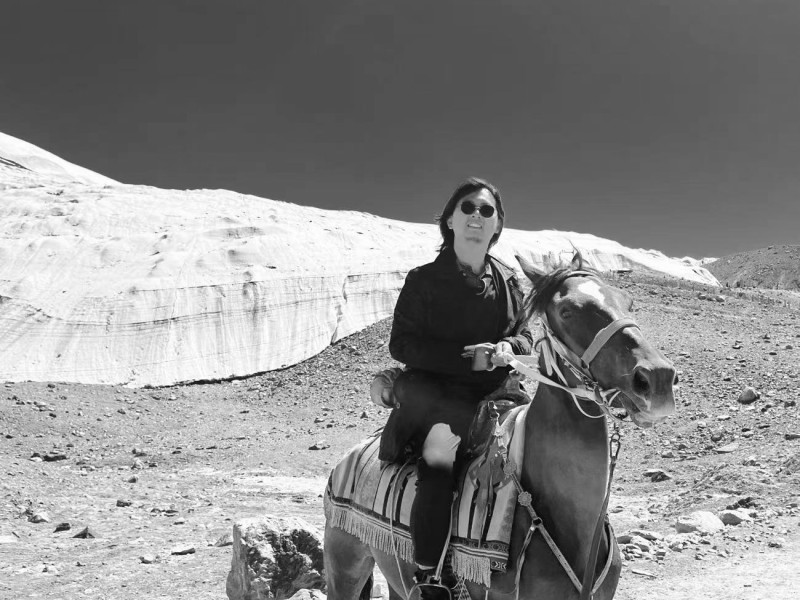 | Zeyuan Wang
Ph.D. candidate - University of Toronto
China
|
-
03.02.2025-27.03.2025
Using Mixed Methods to Understand how Infant Formula Marketing, Communication Channels, and Traditional Health Beliefs Affect Exclusive Breastfeeding among Women in Palawan, Philippines
The purpose of the proposed study is to understand how infant formula marketing information and traditional health beliefs are disseminated through different communication channels and social networks to influence EBF practices among lactating women in Palawan, the Philippines. This study aims to further our understanding of the root causes of current breastfeeding behaviors and to inform policies to improve the EBF rate in the Philippines and potentially other low-resource contexts. The sample of the proposed study will include postpartum mothers from both urban and rural settings. It will complement evidence cited in the WHO’s report (2022b) related to infant formula marketing with only urban samples.
Research Questions
The overarching research question is how do infant formula marketing, communication channels, and traditional health beliefs affect the low EBF rate in the Philippines? The hypothesis is that multiple sociocultural, corporate, and communication factors interact to explain the low EBF rate in the Philippines.
The quantitative research question is what are the correlations between EBF and indicators related to individual and family factors, communication channels and social connections, and traditional health beliefs? Individual and family factors include age, parity, food security, maternal employment, family income, and geographic types of barangays (rural and urban). Communication channel and social connections indicators include owned transport, trust in social groups (relatives, barangays, church, health stations, and neighbor), knowing some health workers (barangay health workers, health professionals), access to mobile phones, and sources of health information. Traditional health belief indicator includes the use of traditional healers. The hypothesis is that the multiple aforementioned factors can all have an influence on EBF and infant formula use.
The qualitative research question is how do different diffusion networks and communication channels used to promote infant formula and health traditions affect lactating women’s health knowledge, perceptions, beliefs, and breastfeeding behaviors? The diffusion of innovation theory will be applied to explain the social processes and interactions between infant formula use and breastfeeding practices in the Philippines that emerge from the qualitative data.
The proposed study has three anticipated contributions. First, the proposed study will work closely with ICM and ICM’s cohort. The results will contribute to a better understanding of how misinformation around infant feeding spreads. It will inform the ongoing ICM projects to identify the most effective method to convince or teach EBF among Filipinos living in ultra-poverty. Second, to the best of my knowledge, this is the first study to use the diffusion of innovation theory to understand the interaction and dynamics among infant formula marketing, traditional health beliefs, and communication channels in the Philippines. It will serve as a case study to increase the awareness of EBF in Palawan Province and potentially inform EBF policies in the Philippines. Third, the proposed study has the potential to complement evidence in WHO’s report related to how pervasive infant formula marketing negatively affects breastfeeding through multiple approaches in urban settings (WHO, 2022). The results of the proposed study may influence future WHO reporting and breastfeeding policies by adding much-needed data from rural participants.
Based on my field notes and initial results, the inductive qualitative results show that infant formula marketing in extremely remote areas without paved roads, signals, and internet is rare, and infant formula is not the only alternative to breast milk. However, people still need alternatives such as rice water, sugar water, and coffee mate for working mothers and mothers without milk; some people find it difficult to differentiate between infant formula and adult milk. The current breastfeeding policies have many urban middle-class assumptions. Many recommendations in policies, such as going to the hospital and putting breast milk into the refrigerator are hard to implement in extreme low-resource settings. Policies such as building breastfeeding rooms and encouraging mothers to bring babies to work are also not feasible in extremely low-resource settings because mothers in extremely remote areas are very likely to breastfeed in public and transportation is too difficult to bring babies. Local people also have multiple traditional health practices and taboos for both babies and lactating mothers but hospitals and health workers do not believe them, which may lead to miscommunication and mistrust. Both urban/remote health inequality and social class health inequity exist.
The initial deductive results show that although modern technology such as cell phones and the Internet gradually become popular in some remote areas, many regions still lack access such as isolated islands and deep mountains. Infrastructure inequality extends the gap of health inequality.
Zeyuan Wang is a Ph.D. candidate in Social and Behavioral Health Sciences at the University of Toronto and a graduate fellow in the Culinaria Research Center at the University of Toronto Scarborough. His ancestors are from four different ethnic groups in Central Asia and East Asia (Hakka, Hui, Han, and Sogdian). His previous academic training includes social sciences, biochemistry, nutritional sciences, global health, engineering, and business. His main research focus is traditional and Indigenous food systems and nutrition, using traditional knowledge to adapt to climate change, mixed-method research, breastfeeding behavior, food and spirituality, and social and commercial determinants of health. He is also exploring how to use visual arts for sustainable Indigenous food system education. His doctoral study is on how industrial food marketing and traditional health beliefs influence infant feeding in extremely remote areas in the Philippines. He is collaborating with scholars from the Silk Road countries for the sustainable food system transformation in Southeast Asia and Central Asia. He has fieldwork experience in India, Mexico, Armenia, Tanzania, Kenya, China, Ecuador, Kazakhstan, Uzbekistan, and the Philippines. He has been closely working with international organizations, such as FAO and UNESCO. He is also a junior member of the Task Force on Indigenous and Traditional Food Systems and Nutrition under the International Union of Nutritional Sciences.



 Précédent